Rare diseases deserve
real drug candidates
PHYSIM produces pre-clinical Computational Disease Analysis (CDA) reports for rare disease foundations, orphan drug programs, and biotech companies. The same depth of analysis that billion-dollar indications get — delivered as a complete report, ready for your lab or your next grant cycle.
The McCauley Convergence Cascade maps every disease as a structural failure architecture — identifying upstream control points, drug targets, and repurposable compounds across the full human genome. Deterministic. Not probabilistic.
Behind every rare disease is a family running out of time
There are over 7,000 known rare diseases. Collectively, they affect 400 million people worldwide — 30 million in the United States alone. Most are children. Most have no approved treatment. And for the families living with them, every month without progress is a month they don't get back.
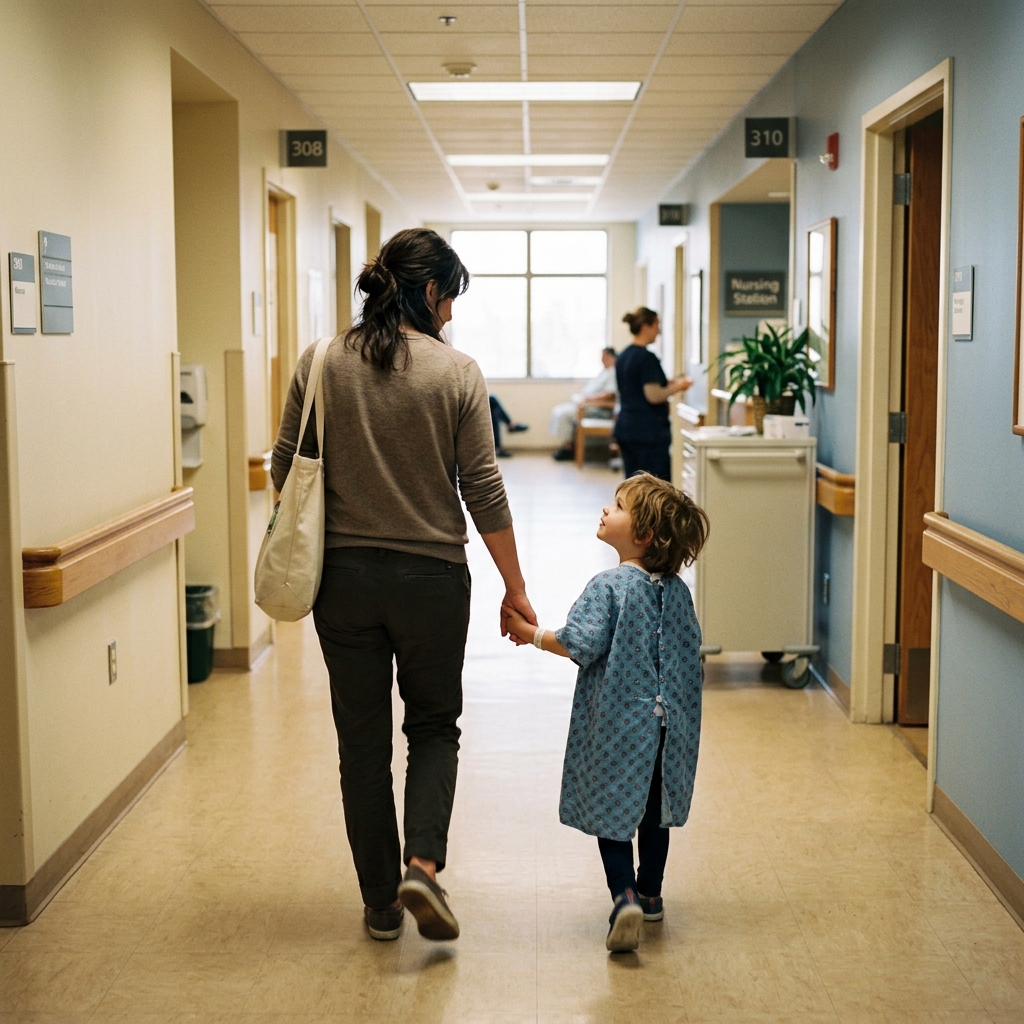
For rare disease families, every hospital visit carries the weight of uncertainty — and the hope that someone, somewhere, is working on an answer.
A child with a rare disease will see an average of 7 specialists over 5–7 years before receiving a correct diagnosis. Some never do. Families describe this as the "diagnostic odyssey" — years of wrong answers, wrong treatments, and wrong hope.
Of 7,000+ rare diseases, fewer than 5% have any FDA-approved therapy. Parents become researchers. Foundations fund their own science. Families organize clinical trials. Not because they want to — because nobody else will.
Half of all rare disease patients are children. Many conditions are degenerative. Families don't have the luxury of a 12-year drug development timeline. They need candidates now — or they watch their children decline waiting for a pipeline that may never arrive.
"Alone we are rare. Together we are strong."
— NORD (National Organization for Rare Disorders), founding motto
Why rare diseases stay rare in drug development
It's not that the biology is unsolvable. It's that the system was never designed for them.
Economics Don't Justify the Investment
A traditional drug development program costs $2B+ and takes 12–15 years. For a disease affecting 10,000 patients, the ROI calculation kills the program before it starts. Foundations are left to fund their own research — often with budgets under $5M.
Small Patient Populations = Small Data
AI-driven drug discovery relies on large datasets. Rare diseases have tiny patient cohorts — sometimes under 100 known cases worldwide. Statistical models fail. Machine learning has nothing to train on. The standard tools simply don't work here.
Limited Research Infrastructure
Most rare diseases have no animal models, no cell lines, and no established biomarkers. Researchers start from scratch — often at a single academic lab, funded by a parent-organized foundation, with no computational support.
Time Is the Enemy
Many rare diseases are degenerative — particularly in children. Families can't wait for a 10-year pipeline. They need to know NOW: which genes matter most, which drugs might work, which pathways to pursue. Every month of wasted research is irreversible.
PHYSIM was built for this problem
Our engine doesn't need large patient datasets. It doesn't train on historical outcomes. It computes disease architecture from first principles — mapping every gene, every pathway, and every convergence point in the disease's structural failure cascade. Then it screens 3,127 FDA-approved compounds against that architecture.
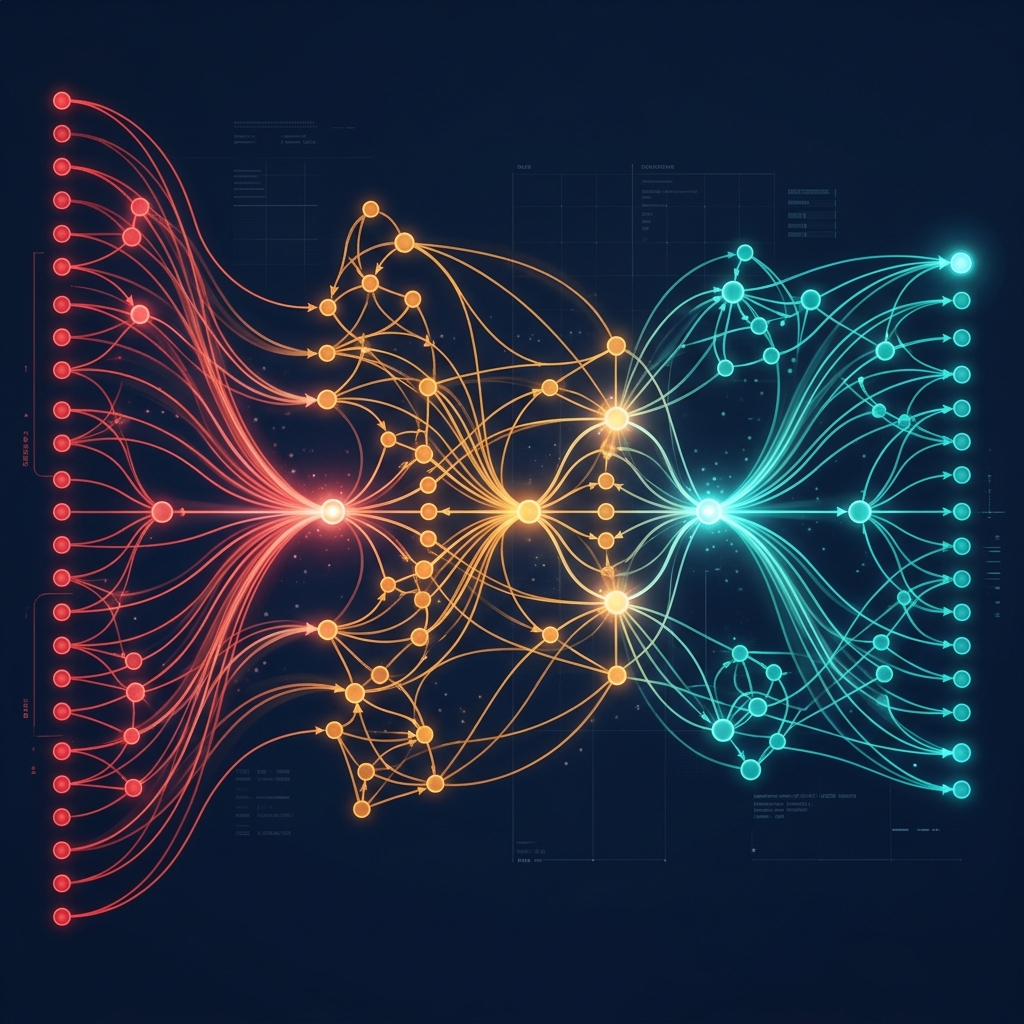
Visualization: Disease genes (red) cascade through pathway intermediaries (amber) to drug-targetable convergence points (teal).
Who commissions a rare disease CDA report
We produce pre-clinical CDA reports for organizations that need computational answers before entering the lab.
Rare Disease Foundations
You have research grant budgets and a mission to find treatments. We narrow your drug candidates computationally — so every dollar you spend in the lab is aimed at the highest-probability targets.
Orphan Drug Biotech
You have a rare disease target but limited runway. We validate your hypothesis computationally before you burn capital in the lab — giving you data that strengthens your next raise.
Pharma R&D — Orphan Programs
You're evaluating rare disease indications for existing compounds. We screen your approved drugs against new disease architectures and identify repurposing candidates with existing safety data.
Academic / Grant-Funded Research
You need computational validation to strengthen grant applications or publications. We produce deterministic, citable findings that complement your wet lab data.
Rare disease analyses we've already completed
Each analysis is a real CDA report — complete with gene cascade mapping, compound screening, proof of discovery, and literature validation. These are not demos.
SLC6A1 Epilepsy
GAT-1 transporter cascade analysis with Tiagabine confirmation and GABAergic inhibitory deficit pathway mapping.
Duchenne Muscular Dystrophy
48-gene cascade with FGGY/ribitol novel pathway discovery and fibrinogen fibrosis mechanism confirmation.
Huntington's Disease
Disease-gated BBB delivery concept with oral PAI-1 inhibitor — selective CNS entry through HD-compromised tissue.
ALS (FUS / ALS2 Separation)
Computational proof that ALS is two structurally distinct diseases — with Nusinersen cross-domain repurposing thesis.
Andes Hantavirus
25-node host-response cascade with cross-disease fibrinogen link and 4 therapeutic intervention points.
Every CDA report includes
A complete pre-clinical computational analysis delivered as a single, auditable document.
Full Gene Cascade Map
Every gene in the disease architecture ranked by structural criticality — from first cellular compromise through irreversible progression.
FDA-Approved Compound Screen
Existing drugs computationally validated against the disease architecture. Repurposing candidates with established safety profiles.
Novel Pathway Discovery
Cross-disease convergence analysis surfacing pathways and targets the literature hasn't connected yet.
Proof of Discovery
Cryptographically hashed computational receipt with null hypothesis testing and structural parity verification.
Your disease shouldn't have to wait
Whether you're a foundation director, a biotech founder, a researcher, or a parent who became a scientist — tell me the disease. I'll map its full architecture, screen every FDA-approved compound against it, and deliver a complete CDA report with drug targets, novel pathways, and safety profiles.
Start a Conversation →